Wednesday, May 28, 2025

Nursing - Vocation or Profession?


By Frances Corkran

To the editor of the Baltimore Evening Sun, July 7, 1954

In response to the comment "nursing is a vocation rather than a profession and a girl (nurse) is trained rather than educated," I would like to say that fifty or a hundred years ago when professions were in a state of apprenticeship, we could speak of training individuals and not educating them. But we cannot speak so today.

If nursing is a vocation, we are certainly striving toward making it a profession. As medical knowledge, hospital medical care plans and specialization have increased, duties once delegated to interns have been taken over by the nurse. In order that a nurse may efficiently and intelligently care or direct care of a patient, she must not only be trained to meet the physical needs of the patient, but she must meet the psychological and social needs. The nurse must know the "whys" as well as the "know how." The medical profession is propounding more and more the mind and body concept in disease and the importance of assisting the organism to adjust to its post-hospital environment. Nurse with just "training" cannot carry this big order alone.

Just because a young woman chooses to become a nurse, must she forego the pursuits of knowledge that make for a fuller and happier life? Skills or tasks or training without knowledge make any position or vocation a monotony. The knowledge we bring to the skills that we perform is what is meaningful to the patient and to the nurse.

The practical nurse has a big place in the nursing profession in bringing physical comfort to the patient. We need collegiate nurses to teach the practical nurse knowledge and skill and to nurse the whole patient. The nursing profession is no longer an ivory tower or a separate entity but has relationships with many other branches of knowledge. The curricula in nursing schools indicate the awareness of the relationship of the nursing profession with other fields, and our curricula have to be geared to our times, not times of the past.

(Note: Mrs. Hall nee Corkran received her Masters in Education from the University of Maryland in 1956.)


Sunday, May 12, 2024

Overripe Apples - a short story


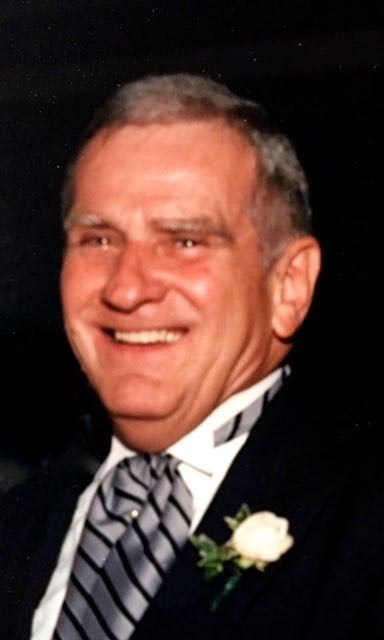
By Frances Corkran Hall  (pictured at left with Checkers)

The corpse blew soft puffs of sweet stale air in my face; wet gurgles from her chest rumbled in my ears as I turned the warm heavy body to prepare her for the undertaker.

Outside a blizzard was throwing a blanket of snow over the sleeping city. Everything was quiet but the wind. It was moaning and groaning; it shook the creaky hospital and jingled and jarred the glassware in the dim-lit sick room. My heart raced with the wind and my teeth chattered with the rattling windowpanes.

As I gently released the body blood seemed to flow in her face and neck. Startled, I checked the patient's pulse and felt fast throbbing beats. Swaying from fright, I grasped a chair for support as I sought my mirror and held it to the corpse's face. The glass was free of moisture. I sighed with relief, but in the next instant the nauseating fruity odor came again from the corpse, enveloping and suffocating me.  I was sick.

My post-mortem care procedures had made no mention of these occurrences. I shuddered at the thought o the next step, stuffing her mouth with cotton from the mortuary basket. What should I do? What if Mrs. Corey were still alive?

This was my sixth month in the nurses' training school and my second look at a dead person. But Mrs. Corey looked alive! Her body was warm and pink, unlike the first corpse I had viewed, all pale, bony and cold.

I ran to find the charge nurse or the night physician. Hurrying down the gloomy hall, I heard the clanking elevator. "Oh no, it couldn't be the undertaker," I thought as an intern stepped from the grating vehicle. He half-listened as I poured out my story, then shrugged and asked, "Dr. Post's diabetic patient in room 313?"

I nodded. 

"She was pronounced dead, wasn't she?" he huffed and then swaggered down the hall muttering something about student nurses.

Even so I was not reassured. I vividly recalled stories of reopened coffins showing deep fingernail scratches from struggles to escape. My fright heightened even more by these thoughts; I ran blindly up the corridor and collided with the chief medical doctor.

Listening to my disorganized story, Dr. Burke gently said, "Mrs. Corey is not alive. She had no pulsations; you only felt your own heart pounding away." He eased my mind about people being buried alive as he recounted the discovery of the stethoscope and its use in listening to body-generated sounds. He added some information about embalming.

Using layman's terms because of my inexperience, Dr. Burke briefly compared Mrs. Corey's living body to an engine containing fuel of incorrect mixtures of glucose and fat. The combustion products from burning this mixture led to unconsciousness or diabetic coma. The acetone breath scent came from these products and is characteristic of the disease. But a basket of overripe apples in a closed room will give off the same saccharine revolting stench.

"Now," Dr. Burke continued, "the dying woman was too weak to exhale all the stale air, but after death the movement of the body brought the air forth. Other bodily complications caused a stagnation of blood in her face and neck to give the pink coloration."

Thanking Dr. Burke, I resolved to write a nursing manual and include the rare occurrences that a student nurse may encounter in post-mortem care. I did.


Saturday, April 27, 2024

Is Harmony A Lost Art?

By Mrs. D. Y. Grieb

A few years ago found me, figuratively speaking, drifting in the Sargasso Sea. Yes, I was taking lessons - music lessons - practicing Czerny exercises, splendid gymnastics. Czerny exercises eternally, with a few sonatinas mixed in, to be practiced over and over one thousand times. The oftener of the better; that was the central idea. So I believe after all that I was taking lessons in physical culture. 

But I was discouraged, drifting around, always going, but never arriving anywhere. Poor old Sisyphus lugging the stone up the hill, only to have it roll back again, could not have been more disheartened.

Being a grown up, I reasoned with myself and with my teacher. "Why is this thus and so?" and "There must be a better way to learn music." The reply was "Do as I tell you; there is no other way." Still unconvinced. I questioned every musician who would talk to me on the subject. How do you memorize? Some did not know. One said he memorized a measure at a time learning the whole piece before he played it. A long piece would take several months to memorize. I knew that some artists memorize a piece in a few days. Did they possess a special gift? About that time, an article appeared in The Musician magazine, saying that the way to memorize was to analyze. Here was another difficulty just as dreadful, for I didn't know anything about it. And how could I learn? Living out of town not within easy reach of a teacher, it seemed impossible. But finding a way, I began the study of harmony and hereby hangs a tale. 

Beginning humbly at first principles in Prima Vista and Harmony courses, I soon saw, like the wisest of all the ancients, that I knew only one thing and that was that I knew nothing. This was a fine beginning.  In a short time, I became wonderfully interested. Everything seemed so different. Oh, how I worked with what delight. I picked out tonic chords, dominants, subdominants, and supertonics in all the keys. Here was something tangible for the mind to grasp; a foundation on which to build; music meant something. Thought was mixed with effort; here was the open sesame to musical culture. Pushing out into the Gulf Stream, I reached the broad ocean and the view ahead was inspiring. 

I became infatuated. The lessons led on through preludes, little fugues, sonatinas and finally sonatas, and with mental powers aroused, I analyzed, dividing into motifs, sections and phrases, until my ear could detect the different chords and my delight knew no bounds. 

On I went until even in my dreams those same chords, with broken backs and disabled feet, chased through endless measures like Orestes pursued by the Furies. But my teacher said that I was doing excellent work, and I was happy. 

Then came composition, still continuing the harmony. Even in the wildest flights of my imagination I never dreamed of composing, but I began with simple phrases of four measures using simple rhythms and then little song forms. Of course, they all sounded very much alike, but were they not my very own? 

The way to learn to do anything is by doing; not by going through volumes of theory, but by practice. We are apt to think that a genius writes music by a sort of inspiration. He does to some extent, but he follows the laws of music in his compositions. Not man-made rules but scientific laws, like the laws governing mathematics or any other science. 

It is easy now to understand how analysis is essential to rapid reading and memorizing. Imagine an adult having to spell every word he reads. How tedious that would be! That is the way he reads who does not understand harmony. He must read each note as it comes, and it is a wonder he or she can read at all with any speed. But suppose he or she knows something of the laws of music; knows the chords in every key and their natural place in composition; can determine the extent of the motifs and see them built up into phrases; can determine by the cadences the ends of the phrases; knows. beyond a doubt where the accent should be, whether indicated by the composer or not. Then he or she can read music as he reads a language, not a word at a time, but he can grasp in one mental effort a whole motif or phrase. And what a difference there is expression; he or she will express the thought of the composer and will not need to go to someone else for his interpretation. 

This is also the secret of memorizing.  First analyze; note the prevailing chord or chords in each measure; find the first motif or text, as it were; follow that motif as it wanders through the beautiful sonata, repeated, answered, developed like a character in a play, as Shakespeare presents Cleopatra, ever changing in her moods and developments of character, but always Cleopatra. Now notice the transitions; threats of changing into another key, and finally changing. Listen as a it glides along so sweetly in its major key, going into the more somber relative minor, winding back again through highways and byways into its original key for the close. 

We do not play musically because we do not think musically. We blame our poor fingers when the fault is in our heads. We hesitate and stumble because the brain is sending uncertain orders to our fingers. We practice a piece over and over until it become mechanical without a. bit of mind in it; and if there happens to be a break, there is nothing to come to the rescue. When if we would understand first, and practice one half as much, we should accomplish ten times more. 

I cannot but think that harmony is not a lost art; that it is not only for the gifted few but can be learned by anyone who will work when it is presented in a practical, rational way. 

Sunday, April 21, 2024

Music In The Home - Ignace Jan Paderewski

By F. C. Robinson 


Most of our readers are familiar with what is known of Paderewski's life and work. He is the son of a gentleman farmer of Podolia, Poland, and from his father inherited an indomitable will and the power and love of work, also his high breeding and fine instincts. From his mother he inherited his love of music but was unfortunately denied the advantage of her care and influence because of her death, which occurred while he was a mere infant.

In the July 1904 issue of Musician, in an article entitled All Manner of Musicians, Miss Edith Lynwood Winn made a few remarks referring to Paderewski with which I for one, heartily sympathized. She referred to the fact that very many musicians play with their best feeling - give to their hearers of the very best and highest - "when under the influence of adversity, disappointed love, and the pain of loss." She takes Paderewski as an illustration, adding, "The richest years of Paderewski's musicianship and artistic development may have been the years of sorrow after his wife's death."

That said, even tragic story comes to one's mind, of the young wife suffering in her last illness for delicacies and attentions that it was impossible for the struggling young artist husband, in his poverty, to provide. In addition to her untimely death, the little child she left to the young father was an invalid. Of Paderewski's loving care and tenderness toward he (physically) afflicted son we all know about.

Finally, death released the poor young fellow and snapped the nerve-tension under which the father suffered. It was while Paderewski was felling these influences deeply and keenly that he poured forth all that was in him in music. We do not feel that Paderewski's is a nature to forget these past experiences. We feel that he deserves the present life he is leading, which Miss Winn assures us is peaceful and luxurious.

She says, "All is placid now. He is rich and he has married the wife of his old friend." She is an excellent businesswoman, relieving Paderewski of financial cares, and thus his life is passed on the beautiful estate he purchased a few years ago. He deserves a goodly share of peace and of happiness, and we therefore rejoice that it is his. But his music?  Does "the satisfied" Paderewski equal the suffering Paderewski? To many it does not seem so. I think, with Miss Winn, that he plays, "less emotionally, more intellectually; with no diminution of poetic feeling," but with "the fire of passion" lacking.


Monday, May 31, 2021

Can Music Be Defined? 


There is probably no musician who has not tried to define music. 


Nevertheless, the  subject is one of great interest to musicians, and has excited the imagination of many great thinkers and philosophers. 


Most of them say what music does rather than what it is. An interesting collection of opinions is reprinted below by a musical encyclopedia compiled by Dr. Ralph Dunstan.

The following are the definitions given:


"The poetry of sound." - Encyclopedia Britannica

"The art of the beautiful and pleasing." - Quintilian

"The artistic union of inarticulate sound and rhythm." - National Encyclopedia


"The universal language which when all other languages were confounded, the

confusion of Babel left unconfounded." - Prof. Wilson


"Miraculous rhetoric! Excelling eloquence!" - Izaac Walton


"A kind of inarticulate, unfathomable speech, which leads us on to the edge of the

infinite." - Carlyle


"The mysterious language of a remote spiritual realm." - Hoffman

"All deep thought is music." - Carlyle

"The harbinger of eternal melody." - Mozart

"Next to theology." - Luther

"The highest of all science." - Bach


"The fine art which more than any other ministers to human welfare."

 - Herbert Spencer


"The worth of art appears most eminent in music." - Goethe

"What passion cannot music raise and quell?" - Dryden

"Exalts each joy, allays each grief." - Armstrong

"The medicine of the breaking heart." - Hunt

"The sweet companion of labor." - Sir J. Lubbock

"A genuine and natural source of delight." - Sir J. Hawkins

"The chief recreation of tired humanity." - Kay

"Of all delights, the most exquisite." - Dr. Tulloch

"Has the power of making Heaven descend to earth." - Japanese Proverb

"The voice of liberty." = W.S. Walker

"The sacred emblem of Truth, Peace and Order." - E. Smith (1707)

"There is no truer truth obtainable by man than comes of music." - Browning

"The seed of many virtues is in such hearts as are devoted to music." - Luther


"One of the most forcible instruments for training, for arousing and for 

governing the mind and the spirit of man." - Gladstone


"Rouses the soul to fearless deeds of daring and valour." - Acton


"The man that hath no music in himself,

Nor is not moved with any concord of sweet sounds,

Is fit for treason, stratagems and spoils." - Shakespeare

__________

Originally published in The Etude, November 1909

Wednesday, May 20, 2020

London - After the Romans (part three)

By Walter Besant

The conquest of England was now virtually completed. There was fighting at Old Sarum in 552; at Banbury in 556; at Bedford, at Aylebury, and at Benson in the year 571. One would judge this to be the last sortie made by the Welsh who had been driven into the fens. In the year 577 three important places in the west were taken - Gloucester, Bath, and Cirencester. In 584 there was fighting at Fethan-lea, when the victor took many towns and spoils innumerable; "and wrathful he thence returned to his own."

As late as 596 we hear that the King of the West Saxons fought and contended incessantly against either the Angles (his own cousins), or the Welsh, or the Picts, or the Scots; and in 607 was fought the great battle of Chester, in which "numberless" Welsh were slain, including two hundred priests who had come to pray for victory.

It is therefor evident that the conquest of the country took a long time to effect - not less, indeed, than two hundred years. First, Kent, with Surrey fell; next, Sussex - both before the end of the fifth century. Early in the sixth century the West Saxons conquered the country covered by Hampshire, a part of Surrey and Dorsetshire; next, Essex fell; and there was stubborn fighting for many years in the country beyond the great Middlesex Forest.

The conquest of the North concerns us little, save that it drew off some of those who were fighting in what afterward became the kingdom of Mercia. I desire to note here only the surroundings of London, and to mark how by successive steps of the invaders' march it was gradually cut off, bit by bit, from the surrounding country. When Kent fell, the bridge gate was closed, and the roads south, southwest, and southeast were blocked; at the fall of Essex, Norforlk, and Suffolk, the eastern gat was closed. When Wessex was an established kingdom, the river highway was closed; there remained only the western gate, and that, during the whole of the sixth century, led out into a country perpetually desolated and destroyed by war, so that by the middle of the sixth century no communication whatever was possible between London and the rest of the country, unless the people made a sortie and cut there way through the enemy.

Observe, however, that no mention whatever is made of the capture of London in the Chronicle. Other and less important towns are mentioned.  Anderida or Pevensey, Aquae Solis or Bath, Gloucester, Chester, and many others; but of London there is no mention. Consider. London, though not much greater than other cities in the country - York, Verulam, Lincoln, Colchester, for instance - was undoubtedly the chief port of the country. We need not bring modern ideas to bear when we read of the vast trade, the immense concourse of merchants, and so forth. Roman London was not modern Liverpool. Its bulk of trade was quite insignificant compared with that of the present. When we begin to understand medieval trade this will become apparent. Still, a vigorous and flourishing place, and the chief port of the country. Why, therefore, does the Chronicle absolutely pass over so great an event as the taking of London?

Monday, April 20, 2020

John Mason Evans Hasslinger's Famous Piano (and Keyboard) Teacher Precursors

By Frances Swarthington

Since many piano teachers and instructors often have many students, it's not hard to imagine that branching out from the famous pianists of history their lineage or succession of talented pupils and virtual "descendants." These pupils have spread out across the globe over the decades and can trace their musical education back to the masters of the Romantic era and perhaps further.

BACH, HOMILIUS, HILLER AND NEEFE


We will examine one such lineage leading up to the present day beginning with none other than Johann Sebastian Bach. Much has been written about this master who was composing and performing when the piano was in its infancy and therefore concentrated on the organ, clavichord and harpsichord.


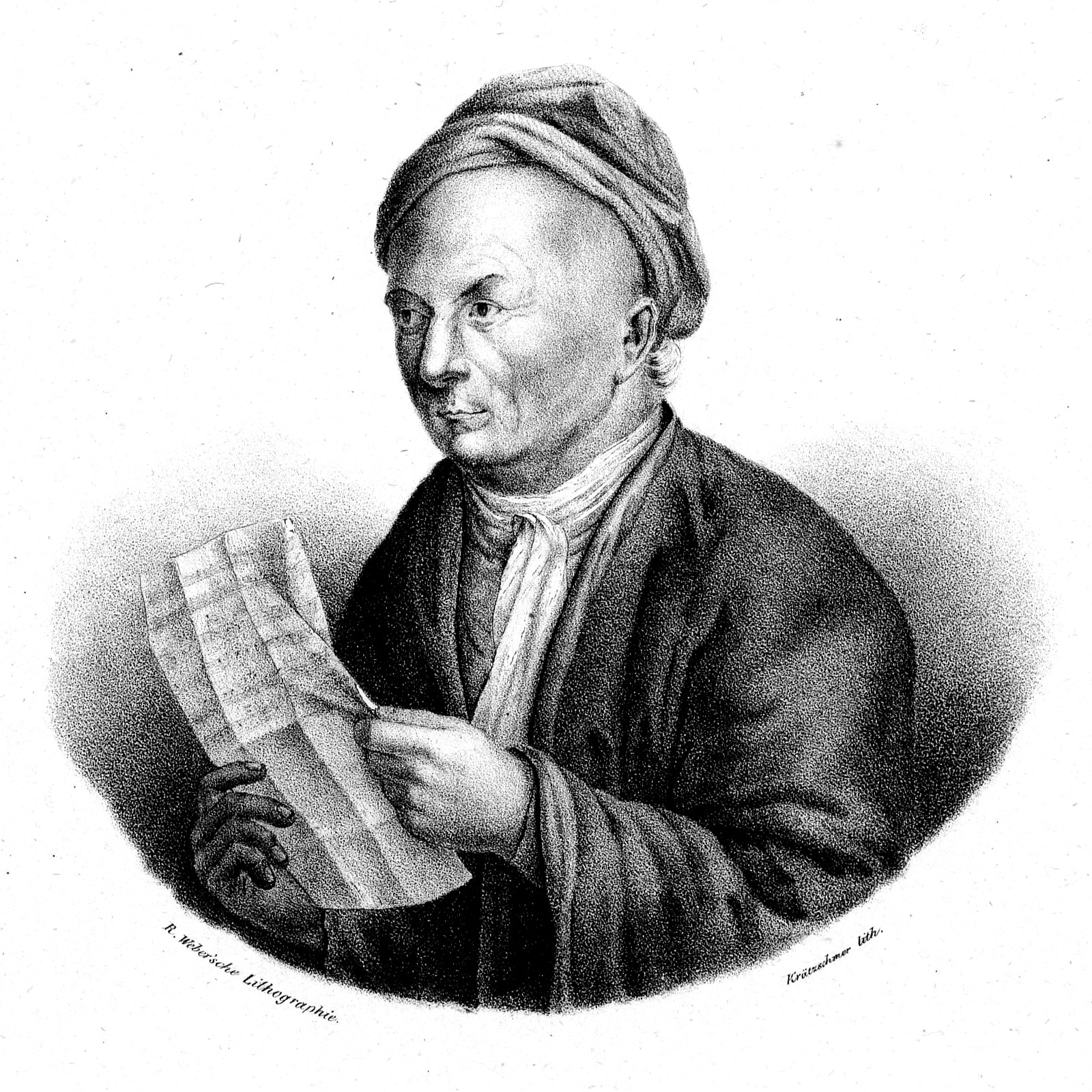
J.S. Bach's pupil Gottfried August Homilius (at left) was born in 1714 in Rosenthal. He studied law at the University of Leipzig starting in 1735. During this time he studied privately with Bach at least until 1742 when he put the world of law behind him to some extent to become the organist of the Frauenkirche (Cathedral of Our Dear Lady)  in Dresden. 13 years later he worked in Dresden's three primary churches as the director of music as well as the choir master of the Kreuzschule (Church of the Cross).He was highly regarded as an organist and composer. He died in Dresden in 1785.

Speaking of the Kreuzschule, it is the oldest surviving school in Dresden; possibly founded in the 14th century. This is where Homilius taught his pupil Johann Adam Hiller.


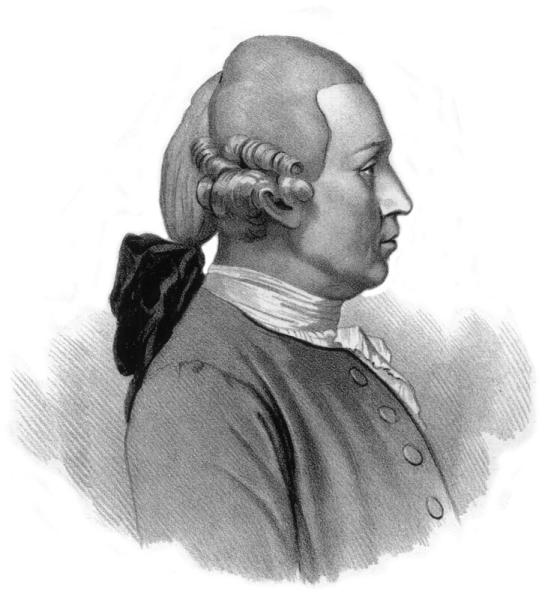
Hiller (at left) was born on Christmas Day, 1728 in Wendlich-Ossig, Germany. After his father's death at age 6 he found it difficult to procure a proper musical education. He persisted however with his talents in several instruments as well as voice. By 1747 he was studying the harpsichord under Homilius at the Kreuzschule.   He studied law and music (as did Homilius) in Leipzig beginning in 1751. He later became well known as the creator of a form of German opera, Singspiel ("sing-speak"). From 1781 to 1785 he was musical director of the Gewandhaus concert hall and from 1789 to 1801 choir master and organist of the Thomaskirche (St. Thomas Church). He died in Leipzig in 1804.


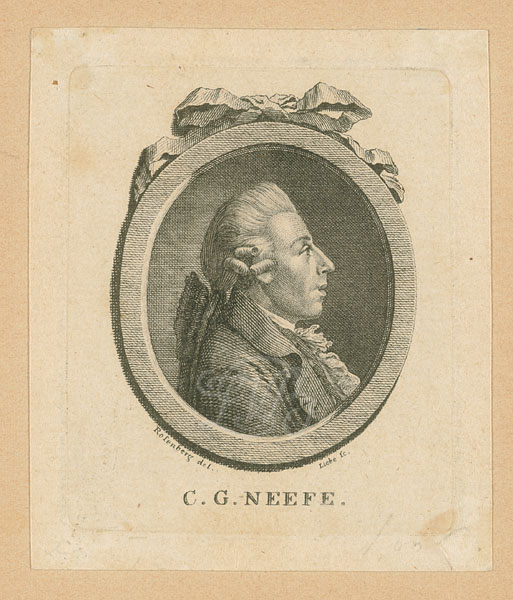
His pupil Christian Gottlob Neefe (1748-1798 at left) had also studied law in Leipzig (as his father had directed him to do against his true calling of music and the theatre) and sought out Hiller there as his mentor.  In Dresden he became his mentor's successor as musical director for Abel Seyler's theatrical company which Neefe had joined 1776 . By 1781 he became the court organist in Bonn court succeeding the renowned Gilles Van den Eeden.  Van den Eeden was allegedly Beethoven's teacher for a period but the young Ludwig was certainly Neefe's pupil by this time and substituted as court organist in 1782. 


Much has already been written about Beethoven, this master who bridged the Classical Era with the Romantic Era. 

BEETHOVEN, CZERNY AND LISZT


Beethoven heard the 10-year-old Carl Czerny (at left) performing Beethoven's Piano Sonata No. 8 in C minor, opus 13 at his home and was so impressed he offered to be his piano teacher which he was from 1801 to 1804 and occasionally in the years that followed. Czerny's prodigious memory allowed him to absorb many of Beethoven's works including all of his sonatas for performance. Beethoven recommended Czerny as a teacher who began this aspect of his career at age 15.

In 1819 Franz Liszt's father brought his son to Czerny as a potential student and had him play for him. Czerny was quite taken with the boy's decidedly (at that time) raw talent and took him under his pianistic wing for lessons, gratis. Liszt later as an homage to the kindness of his teacher performed Czerny's works at his Paris recitals.

Liszt's long career included his composing and performing era until 1847 then relinquishing his performing to concentrate on composing, conducting and studying theology ( eventually becoming an abbé). Notably he also taught and his pupils included such famous names as Hans Van Bulow, Eugen d'Albert, Moriz Rosenthal, Alexander Siloti, and Karl Tausig.

It goes without saying these giants of the piano were also brilliant composers whose works have resonated through time immemorial.

BERNARD STAVENHAGEN


Another notable pupil was Bernard Stavenhagen (1862-1914, at left with Liszt) who after beginning piano studies at age 6 later studied under Liszt in Weimar late in the famous virtuoso's life, in 1885. Stavenhagen also travelled with Liszt over a great deal of Europe on Liszt's 1885-1886 tour where he visited Budapest, Munich, Innsbruck, Rome, London, Antwerp, Paris and Bayreuth. At Liszt's funeral Stavenhagen gave the oration.

For ten years after Liszt's 1886 death, Stavenhagen toured Europe and North America. His musical career highlights included court pianist to the Grand Duke of Saxe-Weimar, and conducting various operas in Weimar and Munich as well as works by such luminaries as Strauss, Debussy, Mahler and Ravel. The Geneva Conservatoire received him in 1870 as a teacher of piano master classes until his death in 1914. He composed two piano concertos, 1893's Piano Concerto in B minor and 1912's Second Concerto. In addition to his musical accomplishments he was also decorated as a knight of the Order of the White Falcon. He died on Christmas day in 1914 was buried in Weimar.

ERNEST HUTCHENSON


The next link in our antecedent timeline is Ernest Hutchenson (1871-1951) who was born in Melbourne, Australia. Hutchenson was a child prodigy and at age 14 travelled to Germany, specifically the Leipzig Conservatory where one of his teachers was none other than Bernhard Stavenhagen. Stints in London and Berlin evenutally led Hutchenson to settle in the U.S., specifically New York City in 1914 where he debuted his repertoire. 

Speaking of repertoire, according to an article by Richard Aldrich in the November 12, 1919 issue of The New York Times, Hutchenson had the chutzpah to play 3 Beethoven concertos in a row at Aeolian Hall: 

"Hutchenson Plays Three Concertos - Whether or not he has ever had any predecessor ins carrying out the idea, Ernest Hutchenson' enterprise in giving a concert in which only three piano concerts of Beethoven should be played is sufficiently original to deserve to remain unique."

Hutchenson's teaching career took off as well. He taught at the Peabody Institute in Baltimore (a future pupil we will discuss was Austin Conradi) and the Chautauqua School of Music in New York State where he provided training and solace for George Gershwin. He taught at Juilliard where he moved up from faculty member to Dean (1926-1937), then President (1937-1945).

Hutchenson composed solo and concertos for piano; 2 pianos; and violin, a symphony and many solo piano works including a transcription of Wagner's Ride of the Valkyries. He also wrote a number of textbooks on piano literature and technique, among them The Elements of Piano Technique, copyright 1907 and published by The G. Fred Kranz Music Co. in Baltimore, Maryland.

AUSTIN BURRELL CONRADI


This brings us to Mr. Hutchenson's pupil Austin Burrell Conradi (1890-1965). Son of a Lutheran pastor, Conradi studied piano at Peabody Conservatory with Ernest Hutchenson, and with its chair of composition Otis Bardwell Boyza (who like Stavenhagen studied at the Leipzig Conservatory). He also taught at such institutions as the Hamburg Conservatory in Toronto (1917-1918), the Curtis Institute (1925-1926), and the Philadelphia Conservatory (1936-1937). 

However Conradi was also a performing pianist and we can see from various programs from 1916 to 1921 what sort of repertoire he commanded.

In the summer concert series at Chautauqua, NY in 1916 (as per The Music News, published in Chicago) Conradi played Chopin (Prelude in Db, Etude in A minor, Valse in F minor, Scherzo in Bb minor), Bach E (Italian Concerto), Beethoven (Sonata in C# minor), Schumann (Einsame Blumen Contrabandiste, arr. Tausig), Scarlatti (Pastorale and Capriccio, arr. Tausig), and Schubert (Barcarolle, arr. Liszt).

As per Musical America (published in New York), by early 1921 he was performing at the Peabody Institute for its Friday afternoon concert series and at the Hotel Hadley ballroom in Baltimore. His repertoire grew to include compositions by Rameau, Franck, Ravel, Debussy and Wagner. In April Conradi was performing the same repertoire at Poli's Theater in Washington D.C.

Alexander Scriabin was also in his repertoire and travelling to New York he recorded several of Scriabin's works from 1921-1922. Some of these have been preserved in player piano rolls. Conradi was attuned to the audiences of his concerts: according to a December 10, 1928 New York Times article, Conradi's recital began with short pieces allowing the audience more time to be seated before he launched into the major works of his repertoire. 

He returned to where he had graduated, the Peabody Conservatory, where he taught piano for over 40 years.  One of his famous pupils was George Manos who was the White House pianist for President Truman and wrote a book about his years there. Another pupil was John Mason Evans Hasslinger who would go on to be a notable teacher of his own.

JOHN MASON EVANS HASSLINGER

(1927-2015) Hasslinger's family seafood business in East Baltimore provided him with work after he graduated from Baltimore Polytechnic Institute in 1945. Entering the Marine Corps in 1946, he was stationed in China as a Control Tower Operator. Returning stateside Hasslinger studied piano under Austin Conradi at Peabody Institute, graduating June 1, 1956. 

After graduation he began his teaching career providing private lessons for his pupils in his parents' house in Lutherville, MD. As his reputation grew and the number of pupils along with it, he split his teaching between his parents' house and his new home in the neighborhood of Pine Valley-Valleywood in Timonium, MD where he and his family moved in August 1963. His reputation for effective and well rounded instruction continued to grow and included students from a up to 27 miles away in Pennsylvania. Hasslinger provided a balanced approach including theory, sight reading, improvisation, technique, classics, jazz and popular music. 
Some of Hasslinger's pupils include:

Dr. Denise (Dede) Ondishko went on to receive her Ph.D in Music Theory and Composition from the Eastman School of Music and later headed IT and telecommunications departments at several large institutions. In 1999 she became a  National Board-Certified Teacher in early childhood music; 

Soraya Sina (now Sina-Bitters), an RN having worked in the ER and ICU in the Greater Baltimore area; 

Graham Eckler, composer and keyboardist in several bands such as Iguana and Chapter IV;

Stuart Ortel, an excellent artist and now has an interior/landscaping design company in the Baltimore area;

Ellsworth Hall, in addition to working in grants management and IT, continued his passion for music and has been a performer, film and video producer and composer for film, video and multimedia for over 35 years.  Ellsworth has composed 2 piano concertos, the first composed in 1985/1986 but re-orchestrated and released in 2014 on the Melodic Revolution Records label.
_____________

Source materials for this article include:

The Organ and Its Masters (Lahee)
Famous Pianists (Lahee)
The New Grove Dictionary of Music and Musicians
Johns Hopkins Peabody Institute
Wikipedia
The New York Times Archives
Amazon music reviews
The Internet Archive
J.W. Pepper
NYPR Archives
Dignity Memorial
The Music News
Musical America


Monday, March 23, 2020

Musical Discoveries (part one)

By composer and critic Felix Borowski

It is at once a fascinating and a difficult investigation which has for its raison d'etre the discovery of musical discoverers. Such an investigation must be fascinating because there is a certain piquant satisfaction in tracing the origin of things to the source from which they have spring; it is difficult because in so many cases - nearly in all - the existance of numberless affairs of art has been the result of evolutionary processes rather than the offshoot of a sudden and an unexpected stronke of inventive inspriation on the part of some gifted men (or women). The difficulty is added to in certain cases by the nebulous condition of musical chronicles in earlier periods of time.

Inventions which were of material assistance to the progress of what may be called modern music could not come into being until someon  discovered a method of expressing musical ideas in writing - the invention of musical notation, in a word. This invention had, first of all, to consist of a staff which would permit the pitch of sounds to be designated, and secondly of a method of indicationg the duration of notes. Now a primitive species of notation had been employed by the ancient Greeks and Romans, and in the eighth century a species of stenographic notation - it is known to us as the "Neume" system - was in general use. But there was not staff and therefore no precise method of fixing the pitch of notes.

The Invention of The Staff

The first great invention arrived, therefore, with the discovery of the staff. This came about with the employment of one line, the pitch of whihc was supposed to represent the note "F;" but no one knows who was the musician to whom it first occurred to fix the exact pitch of the "Neumes" placed upon this line. Probably it was some humble but ingenious monk - for after all, it was the monasteries that, in the earlier days of art, accomplished the most for music and painting and sculpture.

The staff was then, however, in a merely rudimentary state. We arrive at the invention of one such as is known to us today; and this brings forward the name of Guido of Arezzo. This Benedictine monk, who was born about 995 at Arezzo, in Tuscany, was undoubtedly the inventor of the four line staff; whether he was also the inventor of some other things - solmization and the clefs for instance - is less certain. The discovery of giving time and rhythm to music came later; nor is it possible to say who was the first to invent notes of different value, or who invented the signs which we call "rest." Bar line did nto come into existence until about four hundred years ago.

The First Printed Music

The gratitude of music lovers should go out to the man who first made printed music possible. Now the art of printing music followed very shortly the invention of printing books. The first to print music of any kind from type was Ulrich Hahn, a Roman printer who brought out a Roman missal with notes in 1476. His work was quickly taken up by other printers. Our modern system of printing sheet music froum engraved copper plates was invented by Simone Verivio, of Rome, who published by this method his collection of Canzonettes entitled Diletto Spirituale in 1586. But music typography has, to be sure, undergone remarkable changes and improvements since that time.

By the time the sixteenth century had well started, the rapid dissemination of printed music led to the not less rapid development of different forms in the art itself.
But the century had grown old before any important inventions bearing upon modern music came into existence. It was the rise of instrumental art which was responsible for many of the inventions which, primitive enough four hundred years ago, have since grown into wonderful and complicated forms of art; but in the sixteenth century instrumental music as a separate and independent branch was in its infancy, and it was the handmaid of vocal art. Yet neither the opera nor the oratorio could here come into existence without it.

Saturday, January 4, 2020

Selected Technical Truths from World Famous Pianists

Gems of Pedagogical Thought Crystallized in the Crucible of Time and Experience

Don't Imitate

Don't imitate anyone. Keep true to yourself. Cultivate your individuality in all your practicing and do not follow blindly in the paths others - Franz Liszt

Fast Playing

Do not play too fast. You must bring out the harmonic and melodic beauties, and you cannot do that if you treat the piano like a sewing machine. - Hans Van Bulow

Avoid Fatigue

Physical weakness from too much practice is just as bad as mental fatigue. To permit the muscles to get over-tired is to spoil the tone, at least for the time being and some time must elapse before they can regain their former elasticity and vigor. - I. J. Paderewski

Thought In Playing

Fine playing requires much deep thought away from the keyboard. The student should not feel that when the notes have been played his task is done. It is in fact only begun. He must make the piece a part of himself. Every note must awaken in him a kind of musical consciousness of his artistic mission. - S. V. Rachmaninoff

Phrasing and Fingering

Phrasing is closely allied to the subject of accentuation and both subjects are intimately connected with thatof fingering. Without the use of the proper fingers it is often impossible to execute certain phrases correctly. - F. B. Busoni

Polished Playing

Each note is a composition should be polished until it is as perfect as a jewel - as perfect as an Indian diamond - those wonderful, scintillating, ever-changing orbs of light. In a really great masterpiece each note has its place just as the stars, the jewels of heaven, have their places in their constellations. - Vladimir De Pachmann

Saving Time

The technique which saves time is the technique of the brain, which directs the fingers to the right place at the right time. This may be made the greatest source of musical economy. If you want to save time in your music study, see that you comprehend your musical problems thoroughly. - Xaver Scharwenka

Be Punctual

Be punctual in all your practice. Everything with me goes by clockwork. My house is like a dove-cote. - Frederic Chopin

Intelligent Practice

Don't simply run over the keys as a parrot runs over its pet phrases. That is not real practice. Goodness knows - the parrot has practice enough but it can talk to the day of doom without increasing its mental capacity. All practice must be intelligent - progressive, self-developing. - Emil Sauer

Years and Tears

It is only with labor of years and tears bitter as death that the true artist is developed. Few realize this. Consequently there are few artists. - Anton Rubinstein

An Ounce of Prevention

Remember that an ounce of prevention is worth a pound of cure. Avoid sowing the seeds of mere mechanical playing which devoid as they are of musical feeling, can only beget their own kind. - Dr. William Mason

Real Practice

Continually playing a piece over and over is not what I call practice. When I want to learn a new piece I do not keep the notes in front of me on the music rack. I throw them on the top of the piano so that I have to get up every time I want to look at them. After the image of the passage to be memorized is well i mind I sit down at the instrument and try to reproduce it - notes, touch, pedaling and all. Learn as passage just once. Afterwards only repeat it. 
- Theodore Leschetizky

 Impossible Pieces

To those who are still in the preparatory stage of development I am glad to give one word of advice. Do not play pieces that are away beyond your grasp. Pupils who do this are committing the greatest fault in our American musical educational life. - Fannie Bloomfield Zeisler

True Interpretation

Really artistic piano playing is an impossibility unless the outlines of technique have been erased to make way for true interpretation in the highest sense of the word. - Josef Hofmann

Listen!

It is absolutely necessary to listen to every note you play. Music is a sound, and must be studied accordingly. - William Sherwood
____________________

Originally presented in The Etude, October 1912

Monday, July 30, 2018

London - After the Romans (part two)

By Walter Besant

The following are the facts related by the Anglo-Saxon Chronicle:

A.D. 443 - This year Britons sent over sea to Rome, and begged for help against the Piets; but they had none, because they were themselves warring against Atilla, King of the Huns. And then they sent to the Angles, and entreated the like of the Ethelings of Angles.

A.D. 449 - Hengist and Hora, invited by Verigern, King of the Britons, landed in Britain on the shore called Wippidsfleet, at first in aid of the Britons, but afterward they fought against them. King Vortigern gave them land in the southeast of this country on condition that they should fight against the Piets. Then they fought against the Piets, and had the victory wheresoever they came. Then they sent to the Angles, desired a larger force tob e sent, and caused them to be told the worthlessness of the Britons and the excellence of the land. Then they soon sent thither a larger force in aid of the others. At that time came men from three tribes in Germany - from the Old Saxons, from the Angles, and from the Jutes. From the Jutes came the Kentish men and the Wightwarians, that is, the trib which now dwells in Wight, and that race among the West Saxons which is still called the reace of Jutes. From the Old Saxons came the men of Essex and Sussex and Wessex. From Anglia, which has ever since remained waste, betwixt the Jutes and Saxons, came the mend of East Anglia, Middle Anglia, Merica and all Northumbria.

A.D. 455 - THis year Hengist and Horsa fought against King Voritgern at the place called Aegelsthrep (Aylesford) and his brother Horsa was slain, and after that Hengist obtained the kingdom and Aese , his son.

A.D. 456 - This year Hengist and Aese slew four troops of Britons with the edge of the swaord in the place which is named Creeganford (Crayford).

A.D. 457 - This year Hengist and Aese his son fought against the Britons at a place called Creegan ford, and there slew 4000 men. And the Britons then forsook Kent, and in great terror fled London.

A.D. 465 - This year Hengist and Aese fought against the Welsh near Wippidsfleet, and there slew twelve Welsh ealdermen, and one fo their own thanes was slain there, whose name was Wippid.

A.D. 473 - This year Hengist and Aese fought against the Welsh, and took spoils innumerable; and the Welsh fled from the Angles like fire.

A.D. 477 - This eyar Aella and his three sons, Cymen and Wlemcing and Cissa, came to the land of Britain with their ships at a place called Cymenes-ora, and there slew many Welsh, and some they drove in flight into the wood that is named Andreds-lea. (Probably the landing was on the coast of Sussex.)

A.D. 485 - This year Aella fought against the Welsh near the bandk of Meareraedsburn.

A.D. 491 - This year Aella and Cissa besieged Andredscester (Pevensey), and slew all the dwelt therein, so that not a single Briton was left.

A.D. 495 - This year two ealdermen came to Britain, Cerdic and Cynric, his son, with five ships, at the place which is called Cerdicsore (probably Calshot Castle, on Southampton Water), and Stuf and Whitgar fought against the Britons and put them to flight.

A.D. 519 - This year Cerdic and Cynric obtained the kingdom of the West Saxons; and te smae year they fought against the Britons where it is now name Cerdies-ford (Charford on the Avon, near Fordingbridge), and from that time forth the royal offspring of the West Saxons.

A.D. 527 - This year Cerdic and Cynric fought against the Britons at the place called Cerdics-lea.

A.D. 530 - This year Cerdic Cynric conquered the Island of Wight, and slew many men at Whit-garas-byrg (Carisbrook, Isle of Wight).

A.D. 547 - This year Ida began to reign, from whom came the royal race of Northumberland.

The conquest of England was now vertually completed.

In the next installment we shall examine why there is no mention whatsoever of the capture of London in the Chronicle.

Friday, April 20, 2018

London - After the Romans (part one)

By Walter Besant

The only authorities for the events which took place in Britain during the fifth and sixth centuries are Gildas and the Anglo-Saxon Chronicle. There are other writers - Etherwerd, for instance, who copied the Chronicle, and adds nothing; Nennius, whose work, edited by on Mark the Hermit, in the tenth century, was found in the Vatican. The first edition was published in London in the year 1819, in the original Latin, by Rev. William Gunn. Nennius gives a brief account of King Arthur and his exploits, but he affords little or no information that is of use to us. The work of Richard of Cirencester is extremely valuable on acccount of its topography; it is also interesting as the work of the first English antiquary. But he belonged to the fourteenth century, and has added nothing to the history, of which he knew no more that we ourselves can discover. The book named after Geoffrey of Monmouth is not worth a moment's serious consideration. In Bede's Ecclesiastical History passages may be found which throw side lights onto this period but they are few.

St. Gildas, called Badonicus, is supposed to have been born about the year 520, in Wales. He wrote about the year 560 and is therefore contemporary with the events of which he speaks. His book contains a vast quantity of rhetoric to a very small amount of history. Unfortunately for him, he was called by his admiring fellow-monks in his lifetime, Sapiens - the Sage or Sapient. Perhaps in order to live up to this designation, he was fain to regard himself with so much respect as to assume the garb and language of a prophet, and with what he thought prophectic force, which we now perceive to be ecclesiastical inflation and exaggeration, he proceeded to admonish princes and people of their sins. Every age, to the ecclesiastical prophet, as to the secular satirist, is an age of unbounded profligacy; of vice such as the world has never before witnessed; of luxury advanced to heights hitherto untrodden; of license, wantonness, riot unbridled and unparalleled, insomuchas that Jerusalem, even under the soft influences of Ahola and Aholibah, was righteous and pure in comparison.

No doubt Gildas lived in a most trying and disappointing time. Things went wrong and things went from bad to worse. His own people were defeated and driven continually westward; they couldn not even hold together and fight side by side against the common enemy; religion was forgotten in the fierce struggles for life, and in the fiercer civil dissensions; Saxon, Angle, or Jute, all were alike in that none had any reverence for priest or for Church; the worst passions were aroused. Yet one cannont but think that a lower note might have been struck with greater advantage; and now that it is impossible to learn how far the prophet's admonitions brought repentance to the kings, one regrets that a simple statement of the events in chronological order as they ocurred was not thought necessary to complete a historical work.

As regards the alleged luxury of the time, the monk wrote from a dismal cell, very likely wattled, draughty and cold; his food was poor and scanty; his bed was hard; life to him was mere endurance. The roasted meats (and vegetables), the soft pillows and cushions, the heated rooms of the better sort, seemed wicked luxury, especially when he thought of the conquering Saxon and his ruined country. Of course in every age the wealthy will surround themselves with whatever comforts can be procured. We are in these days, for instance, advanced to an inconceivable height of luxury. One would like to invite the luxurious Cuneglass to spend a day or two with a young man of the present day. Those who were neither rich nor free lived hardly, as they do to this day; those who were young and strong, even though they were not perhaps trained to the use of arms, easily learned how to use them, and when it came to victory or death, they soon recovered the old British spirit.

This is not the place, otherwise it would be intersting to show what a long and gallant stand was made by these people, whom it is customary to call cowardly and luxurious - these ancestors of the gallant Welsh. It is manifest that a period of two hundred yeaers and more of peace almost profound, their frontiers and their coasts guarded for them by the legions of Rome, must have lowered the British spirit. But they quickly recovered. The Arthurian epic, it s certain, has some foundation in fact, and perhaps poor King Cuneglass himself, the bear and butcher, wielded a valiant sword.

In our next installemnt - the facts related by the Anglo-Saxon Chronicle.

Saturday, January 20, 2018

The Awakening

An editorial by James Frances Cooke

Prudery an Injury

Nothing could be more disastrous to American music and American drama than an ear of prudery. The kill-joy earnestness of the zealots continually seeking a Cromwell, to exchange bloody rebellion for some other form of mental and bodily activity, rarely lead to permanent forms of art. Every instance of narrow Puritanism, however necessary it may have been at the time, has been suffocating to higher artistic development. Contrast the products of our own picturesque William Billings, with those of his European contemporaries, Haydn and Mozart.

The enemies of prudery do not plead for licentiousness. They seek to secure decency coupled with common sense. They do not seek to evade the broad human problems that discipline the mind and fortify the soul. They do not strive to escape the vital sociological questions which since the time of Euripides and Aristophanes have been answered in the theater with the greatest possible force. The canyon between Ibsen's Ghosts, Pinero's Second Mrs. Tanqueray, Hauptmnann's Hanele, Henry Arthur Jones' Mrs. Dane's Defence, or even Brieux's unnecessarily clinical Les Avaries, and some of the hopelessly degrading musical shows of the last five or ten years is as wide and as deep as the Colorado.

How the Objectionable Song Is Popularized

How does the infamous song come into existence? Harry B. Smith, author of the libretto of Robin Hood, and dozens of other pieces, has given us a hint. The composer and the librettist hand in their completed work to the manager. The rehearsals commence and the stage door is besieged by representatives of microscopic publishers, all fighting like vandals to get a hearing for their songs. Sometimes the songs have real merit, sometimes they are absolutely worthless products of the cheapest kind of untrained intellect. Sometimes they are filled with the venomous virus of the social ulcers of the megalopolis. Never does the song have any direct bearing upon the subject of the libretto, or bear any relations to the composer's musical scheme. The manager is either moved by the personal persuasion of the publisher, the whim of one of his singer, a bribe or his own belief that the song may "carry" the piece. In the last point he has good precedent because some pieces have been "carried" by particularly taking songs. Even Robin Hood owed a lot to Oh, Promise Me.

False Success

The song gets on. The galley is packed with whistlers, claquers, etc., etc., all of them Hessian hirelings of the song publisher. The song is greeted with a kind of uproar from the gallery. It is demanded again and again. The people in the lower part of the house have little idea that they are being buncoed into taking part in making a worthless song a valuable property for some trifling publisher - soon lend themselves to the psychological influence of the mob and find themselves applauding sentiments they would be ashamed to think about in their own homes. The songs has a run - some publishers report that the run rarely survives six months. If the song is merely illiterate, meaningless, bathos or sickly sentiment it can do but little harm, but when it is reeking with the offensive allusions found in some of the songs of the day, it is time that a musical Board of Health be appointed to disinfect the whole nauseous matter. We do not believe that the people of this country want songs of the pestilential kind. We believe that the so-called hits of this order are entirely artificial. We are confident that the offensive musical numbers do not exist because of the genuine demand, but because they are pounded into the people with theatrical sledge hammers by the panderers that the respectable publishers of New York and every other city are all anxious to annihilate.

How You May Help

Reaching the eyes of many people, Manor Selby Journal may become a great force in safe-guarding the spirit of decency. Its readers may take an active part in exterminating the bad influence of the questionable song. How is it to be done? Certainly it cannot be accomplished by muck-raking. Denouncing special songs advertises them. Their publishers count such notoriety. In England audiences have a custom of booing and hooting anything which does not meet popular approval. In this country we resort to the deadly silence. Theatrical performers virtually live upon applause. Let self-respecting people lose no opportunity to show their attitude toward music and plays surrounding suggestive ideas and the managers will soon have their ears to the ground.

- edited by Boulevard Denim


Saturday, June 17, 2017

Reviews for Conversations with George Edgar Selby

The soundtrack album to Beside the Manor Selby, Conversations with George Edgar Selby has new reviews by noted musicophiles Russell Hammond, of New South Wales, Australia as well as Sven B. Schreiber. We present them here along with an earlier review by critic at large Boulevard Denim.

The remastered album is available here from Melodic Revolution Records.

The album also features composer Ellsworth Hall's Piano Concerto No. 1 in addition to the soundtrack material.


Conversations with George Edgar Selby (music CD - includes music from the soundtrack to Beside the Manor Selby)

Review by Sven B. Schreiber (sbs) 

Ellsworth Hall - to me, a very important name in the prog genre. In 2017, he released a 15-minute song, which I regard as one of the best epic tracks in prog history ("A Home In Your Thoughts / Second Home In Your Thoughts"). I'm extemely picky with tracks above 8 minutes running time, so this kind of appreciation really occurs rarely. The piano concerto on this album is another exquisite epic work, much better than similar attempts done by others. The soundtrack completes the great impression. Favorite track: Allegro Moderato.


On the Composer's Oeuvre - 
Review by Boulevard Denim

Ellsworth Hall occupies a peculiar place, entirely of his own creation, in the field of contemporary music.  He is a seeker after the realities of shadowy and dim illusions, an artist in grays and greens and subtle golds while still dabbling in opulent purples. Mr. Hall is of the "children of revelry," a weaver of dreams. For him, indeed, shadows and dreams are the invincible realities, and from them he derives a compelling music; music which serenely rebukes dissection.

That serenity, that innocence of intention, are indeed remarkable. After the plangent splendors, the torrential rhetoric of his earlier works, Mr. Hall's contemporary oeuvre, owing something of the subdued and elusive beauty of antique tapestries, addresses the spirit with a unique appeal.

His is music in which the emotion conveyed is the emotion of remembered rapture, the beauty, "the surviving beauty of gathered dreams;" seldom the emotion and beauty of that which is actual and present. Mr. Hall is most urgently aroused by such moods of longing and remote enchantment as find jeweled expression in Beside the Manor Selby for which he has written unforgettable music.

At times his habit of artistic  speech tempt him to such outbursts of passionate lament as fill the movements of his Piano Concerto No.1 with so insupportable a poignancy. There is the driving rhythmic asymmetry of the opening movement; the decorative flourishes surrounding the resurfacing primary theme in the second;  the modal and jazzy harmonies of the third; and the adroit use of fortspinnung (along with recapitulations of a leitmotif from the second movement) in the fourth.

Mr. Hall perceives his world with as rapt a gaze, with as complete an absorption in its emotional panorama, as the most vivid and declamatory of the moderns; but the issue of his understanding is certain veiled and continent intensity, an interior passion, a conviction implied rather than than declared. That is, finally, the peculiarity of his art.


Track by track review by Russell Hammond (with gracious permission)


There is light and darkness together with tension and release within the same track
and if not, then with the next track. I have not seen ‘Besides the
Manor Selby’ and I can only comment on the music:

Lento e Allegro – my favourite instrumental track from the album and a
worthy opener. I love its length, the way it ebbs and flows, the
different instrumentation, the drive behind the track and how you
simply stopped it. Not a wasted note and it didn’t overstay its
welcome.

Andante e Presto – This one seems to have the kitchen sink thrown in
it. Quiet start and then deviates all over the place following little
themes here and there and some interesting percussion thrown in. You
definitely won’t be dancing to this track.

Allegro Moderato – Just great to sit down and let the track wash over
you. I liked the stripped back nature with enough ‘Selby’ thrown in.

Andante – the beginning didn’t win me over at all with the synth out
front. But then that was just the warm up and with different
instruments and with then the strings to round the track. Love the
piano section in the middle (a breather) and then it builds on itself
a number of times to its climax and final release – I love the
clapping at the end too.

Besides the Manor Selby Overture – This was the only track to touch me
and I wiped my eyes. To me it was thought provoking and made me
reflect on my life today.

Newsreel – this track that didn’t agree with me but it might be down to context.
(Editor's note: For context - the track is played along with a newsreel depicting a battle in Verdun during WWI)

After Ferdinand – Another track that starts off with drive but doesn’t
resolve itself for me – that context again. Way too short.
(Editor's note: For context - the track is part of the opening credits)

Round About the Garden – I can imagine what this track is trying to convey.

The Archduke Earsworth – Love a good waltz. Pleasant.

The Tower – This track took me on a not too long enjoyable journey.

Gather the Heirlooms – rather down beat track but nicely layered with
a real presence.

La Masque a Enleve – A hymn? My French is non existent but the track
gathers a real church atmosphere with that deep organ.

Verdun – Lovely piano and atmospheric (eerie?) vocals. Reminded me a
bit of a Rick Wakeman track in Journey to the Centre of the Earth.

Undone in Verden – Hard to believe this follows the last track. Mostly
pastoral with that orchestral part in the middle. It could have wound
away for a few more minutes for me.

Here Lies a Wretched Corpse – If the name of a track can determine the
soundscape of a track then this is it. A bit of ‘Selby’ reprised and
it is very well layered and I could see this being at the end of the
movie or as the end credits are rolling.

In Grief Unbound – simply stunning and could have been released as a
single. Your standards for the choice of vocalist are very high – to
my ancient ears.  (Editor's note - the vocalist here is the remarkable Dyan Brown)